

Paying for Assisted Living in Northampton County: Options for Families
Most families think paying for assisted living is just about finding the monthly rate and hoping savings will stretch. But that's only half the picture. The real work starts when you map out what's coming from where — and what happens when one source runs dry. Northampton County has options, but they don't advertise themselves. And if you wait until the last minute to figure out what qualifies, what doesn't, and what requires a six-month paper trail, you're going to feel it.

So here's what matters. If your loved one needs care, start piecing together the funding strategy now. Every program has rules. Every benefit has a waiting period. And every dollar you count on should be verified before you sign anything. This isn't guesswork — it's about building a plan that holds up when the bills start coming in.
What You're Actually Paying For
Assisted living in Northampton County isn't cheap. Depending on the facility and the level of support required, monthly costs land somewhere between $3,500 and $5,000. That baseline typically includes a room, meals, help with daily tasks, housekeeping, and access to group activities. But don't stop there. Memory care? That's extra. Medication management? Also extra. If your loved one needs more than basic assistance, the real number climbs fast.
And unlike some expenses you can delay or negotiate, this one doesn't pause. Once care starts, the clock's ticking. That's why understanding what's covered — and what isn't — matters before move-in day arrives.
Private Funds Still Cover Most of It
Nine times out of ten, families pay out of pocket. Savings accounts, retirement funds, investment portfolios, the sale of a home — that's the first line of defense. It's also the most flexible option because there are no hoops to jump through, no waiting lists, and no restrictions on which facility you choose.
But flexibility comes with a risk. Those funds can disappear faster than expected, especially if care lasts years instead of months. We've seen families burn through six figures without realizing how quickly the math adds up. If private pay is your route, run the projections early and build in a cushion. You don't want to be scrambling for alternatives two years in.
Insurance That Might Actually Help
Long-term care insurance was built for this exact scenario. If your loved one has a policy, dig into the fine print now. Check what's covered, how long benefits last, and whether there's a waiting period before payments kick in. Not every policy covers assisted living — some only apply to nursing homes or in-home care — so don't assume coverage just because the policy exists.
Buying a policy after health issues surface? That's a tough sell. Premiums spike with age and pre-existing conditions, and approval isn't guaranteed. If it's on your radar, act before the need becomes urgent.
Government Programs With Real Requirements
Medicare won't pay for assisted living. Let's get that out of the way first. But other programs might pick up part of the tab if you meet their criteria.
- Medicaid through Community HealthChoices: Pennsylvania's CHC waiver can help cover personal care services in assisted living settings. But eligibility hinges on income and assets, and not every facility accepts Medicaid. Plus, there's often a wait. Apply early and confirm the facility participates before committing.
- Supplemental Security Income: SSI provides monthly payments for seniors with limited income and resources. Pennsylvania adds a state supplement for those in personal care homes, which can help bridge funding gaps.
- Veterans Aid and Attendance: Veterans and surviving spouses may qualify for extra monthly benefits to offset assisted living costs. The application is dense, so working with a Veterans Service Officer saves time and errors.
Each program has its own paperwork, timelines, and hoops. Start the process months before you need the funds, not days.
Tapping Into Home Equity
If your loved one owns a home, that equity can be converted into cash through a reverse mortgage or home equity loan. Both allow access to funds without an immediate sale, which can buy time and flexibility.
But there's a trade-off. Interest accrues, repayment terms vary, and the impact on inheritance can be significant. These aren't simple transactions, and they're not reversible once signed. Bring in a financial advisor who understands elder care funding before moving forward.
Local Resources That Actually Respond
Northampton County has infrastructure in place to help families figure this out. The Area Agency on Aging offers guidance on local programs, eligibility requirements, and care options. They're a solid starting point when you're not sure where to turn.
Nonprofits like the Greater Lehigh Valley Aging in Place Coalition can also connect families with resources and support networks. Don't skip these — they know the landscape better than most and can point you toward funding streams you didn't know existed.
What Families Miss Until It's Too Late
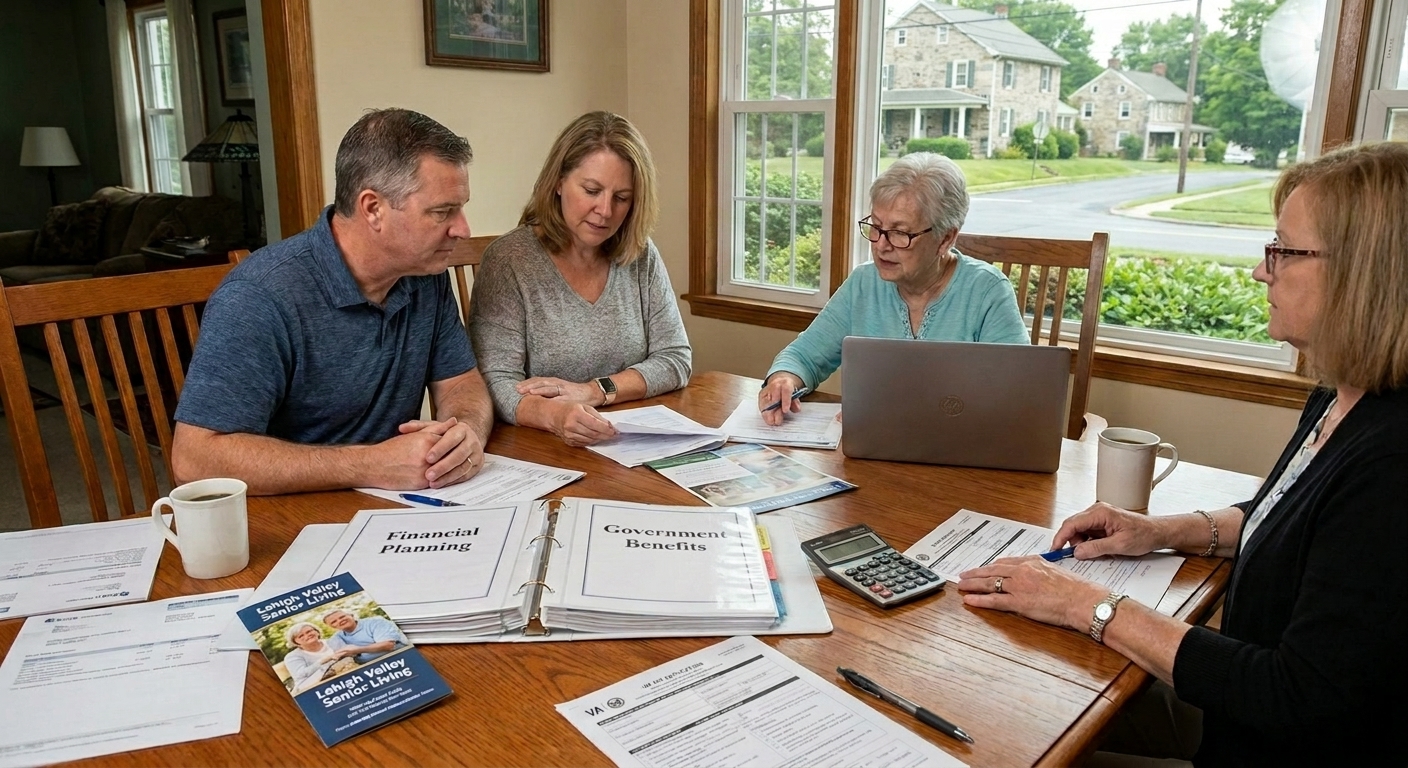
Here's where planning falls apart for most people:
- Waiting until a crisis forces the decision, leaving no time to vet facilities or compare costs
- Assuming Medicaid will cover everything without checking asset limits or facility participation
- Underestimating how long care will be needed and burning through savings too fast
- Ignoring move-in specials, sliding scale fees, or assistance programs offered by individual communities
- Signing contracts without understanding what's included versus what triggers extra charges
Build the Plan Before You Need It
Start mapping out funding sources while there's still time to be strategic. Talk to a financial planner who specializes in elder care. Consult an elder law attorney to protect assets and maximize benefits. Tour multiple facilities to understand what you're paying for and what's negotiable.
And don't do this alone. The programs exist, the professionals are available, and the resources are there. Professional senior living guidance can help families navigate funding options, assess Lehigh County and neighboring area facilities, and make informed decisions. But they don't come to you — you have to go get them. The earlier you start, the more options you'll have when it's time to make the call.
Decisions That Hold Up Under Pressure
Paying for assisted living isn't about finding one silver bullet. It's about layering resources, understanding timelines, and building a strategy that doesn't collapse when one funding source dries up. Northampton County families have access to private pay, insurance, government benefits, and local support — but only if they know where to look and how to apply. Exploring different service areas can help identify additional resources and community support options available across the region.
This isn't a process you want to rush through. The care your loved one receives depends on getting the financial foundation right. So start now, ask the hard questions, and make sure every dollar has a purpose before it walks out the door.
Let's Navigate Assisted Living Costs Together
We know how overwhelming it can feel to sort through all the options and requirements for assisted living in Northampton County. Let’s work together to create a plan that gives your family peace of mind and your loved one the care they deserve. If you’re ready to talk through your situation, call us at 267-429-6259 or schedule a free consultation and let’s take the next step forward together.
‹ Back
Recent Posts
-

Talking to a Parent About Senior Living in Montgomery County
August 13, 2026
-
-

-
Delaying Memory Care in Bucks County Can Create Safety Risks
March 23, 2026
-